PARASITES

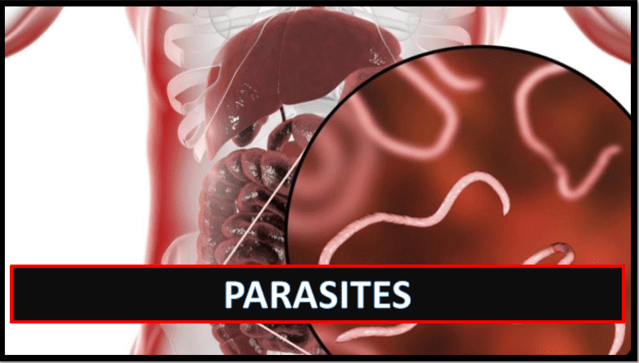
infections of humans caused by parasites number in the billions and range from relatively innocuous to fatal. The diseases caused by these parasites constitute major human health problems throughout the world, and some say that parasites really could be at the root of most chronic illnesses and many forms of so-called mental illness too
Why then are we not being tested for parasites when presenting with ailments that are known to be potentially caused by these parasites? Too often we are simply offered a life-long subscription to big pharma med.
What are Parasites?
The word “parasites” is used in two senses. However, the parasites being referred to today, are, “everything living on you or in you, not just to perch, but to take its food from you” is a parasite according to Dr Hulda Clark, who was an independent research scientist and author of books on alternative health: including “The Cure for All Cancers.” Decades-long research brought her to conclude: that all human disease comes from only two causes: Parasites and Pollution.

Parasites are an integral part of the biosphere and are so diverse and pervasive that they virtually infect every free-living organism, potentially influencing, among other things, host health, behaviour, population size, food web dynamics, and community structure Source.
During their life, parasitic organisms typically go through several developmental stages that involve changes not only in structure but also in biochemical and antigenic composition. Some helminth larval stages have little resemblance to the adult stages (for example, those of tapeworms and flukes).
Some parasitic protozoa also change greatly during their life history; for example, Toxoplasma gondii is an intestinal coccidian in cats but in humans takes on a different form and localizes in deep tissues. Some of these infections can convert from a well-tolerated or asymptomatic condition to life-threatening disease. (source)
Transmission
Food and water are the most common sources of parasite and invading organism transmission, and as we eat and drink often we are frequently exposed to them, cleaning and cooking methods are not enough to destroy them. The CDC (Center for Disease Control) cites food as the catalyst behind 80 percent of the pathogenic outbreaks in the U.S. According to Dr. Ross Andersen, who says;
“Other prominent physicians agree with me; that in human history, the parasite challenge is likely the most unrecognized of all endemic problems. Because they cannot be seen and rarely present immediate symptoms, they remain invisible as a cause or contributing factor to what can be a serious disorder.”
Our pets and other animals can also become infected internally with parasites and through contaminated water and food, and they can also be infected by organisms on their fur/bodies, due to exposure to infected animal wastes (source). Many parasitic infections are transmitted from animals to humans (zoonotic infections), but the human disease may or may not resemble the disease caused in the lower animal host.
“The most important element in diagnosing a parasitic infection is often the physician’s suspicion that a parasite may be involved—a possibility that is too often overlooked.” I have never heard that a doctor has thought parasites might be involved in an individual’s illness, of course, that is not to say they never do, but I would imagine it to be rare.
Parasitic diseases Have Increased
Yet, it is known that parasitic illnesses have increased. and the most common parasite in humans, Ascaris lumbricoides ( human roundworm) is said to infect approximately 30 percent of the world’s population.
ASCARIS
Over 60,000 people die annually from the “neglected” disease that affects mostly tropical and subtropical countries around the world. Although it is a misconception that parasitic infections only occur in tropical areas (source).
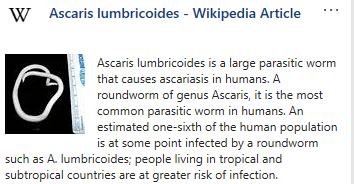
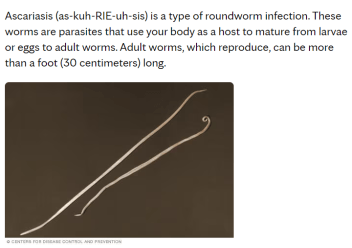
People with ascariasis often have no symptoms but symptoms become more noticeable when the infestation grows. If the roundworms can be in the lungs and can cause: Coughing or gagging, shortness of breath, aspiration pneumonia, and chest discomfort.
Roundworms in the intestines can cause nausea, vomiting, diarrhea blockage, severe pain, and growth impairment due to malabsorption. Larger infestations may have other symptoms, such as fatigue and fever, according to Healthline.
CRYPTOSPORIDIOSIS
Parasitic illness has also grown in importance as a result of AIDS for example cryptosporidiosis, which is a parasitic disease caused by Cryptosporidium (source) and affects the distal small intestine and can also affect the respiratory tract in both immunocompetent (i.e., individuals with a normal functioning immune system and immunocompromised (e.g., persons with HIV/AIDS or autoimmune disorders).
resulting in watery diarrhea with or without an unexplained cough and recent evidence indicates that respiratory cryptosporidiosis may occur commonly in immunocompetent children. source
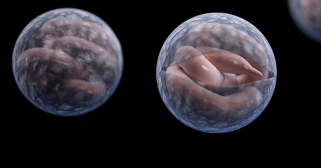
In immunosuppressed individuals, the symptoms are particularly severe and can be fatal.
It is primarily spread through the fecal-oral route, often through contaminated water, recent evidence suggests that it can also be transmitted via fomites (any inanimate object) contaminated with respiratory secretions (Source) .Cryptosporidium is commonly isolated in HIV-positive patients presenting with diarrhea.
Some Diseases are Worse Than Others
There are many, many more parasites with many more diseases that are attributed to a parasite infection too. According to Dr Hulda Clark, “Your body has been trying to rid itself of its parasites and pollutants all your life! It had its own ways. It made stones, it made mucus secretions, and it made itself toxic dumpsites. ” It also gets very sick.
Highly Carcinogenic
A study from 2016 “Parasite Infection, Carcinogenesis and Human Malignancy” conducted by Van Tong et al found that the helminth (parasitic diseases schistosomiasis, opisthorchiasis, and clonorchiasis are highly carcinogenic.
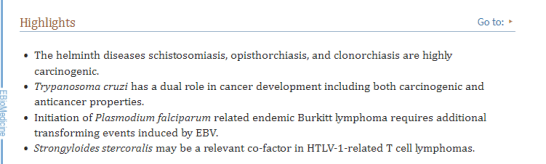
“The associations between infections with parasites and human cancers are well-evidenced. S. haematobium, O. viverrini, and C. sinensis are highly carcinogenic while other infectious species of the genera Opisthorchis (O. felineus) and Schistosoma (S. japonicum and S. mansoni) demonstrate their carcinogenic potential in humans.“
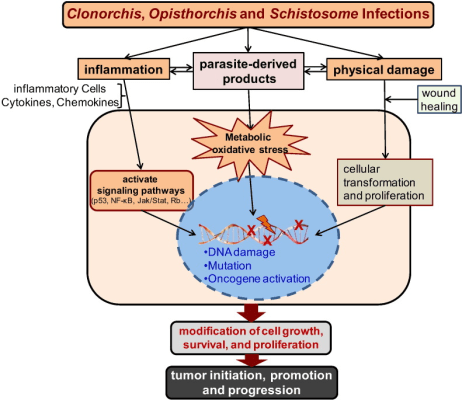
Three main carcinogenic mechanisms have been described for these blood and liver flukes, including chronic inflammation, metabolic oxidative stress induced by parasite-derived products, and host tissue damage during parasite development, along with the active wound healing (source).
OPISTHORCHIASIS
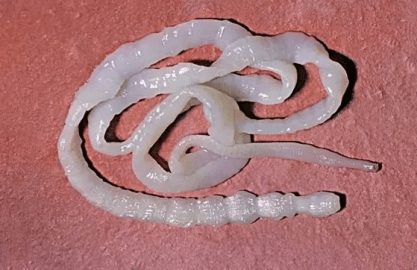
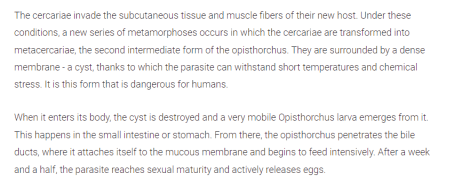
Opisthorchiasis is called a helminthic invasion, the causative agent of which is Opisthorchus – a trematode parasitising in the human body and carnivorous (flesh-eating) animals or a liver fluke.
CLONORCHIS
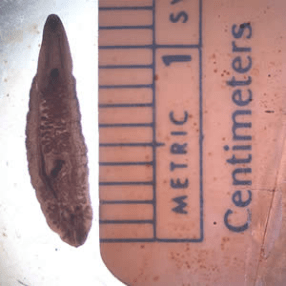
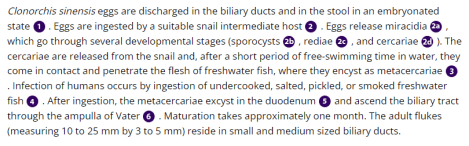
The trematode Clonorchis sinensis (Chinese or oriental liver fluke) is an important foodborne pathogen and cause of liver disease in Asia.
SCHISTOSOMIASIS
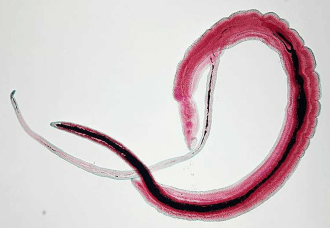
Schistosomiasis is considered the most important helminth parasite of humans in terms of morbidity and mortality. The five species of Schistosoma that infect humans are Schistosoma haematobium, S. mansoni, S. japonicum, S. intercalatum, and S. mekongi (source).
May Cause Cancer of the Bladder
Another study found, “Among parasitic diseases, infections with the two fish-borne liver flukes of the family Opisthorchiidae (trematodes), specifically Opisthorchis viverrini and Clonorchis sinensis, can induce cholangiocarcinoma, and infection with the blood fluke Schistosoma haematobium may cause cancer of the urinary bladder” (Bouvard et al., 2009).
Cancer as a Parasitic Disease is an Old Idea
Cancer as a form of parasitic disease is actually an old idea originally proposed by early microbiologists. They considered the idea self-evident from their microscopic observations of cancer cells.
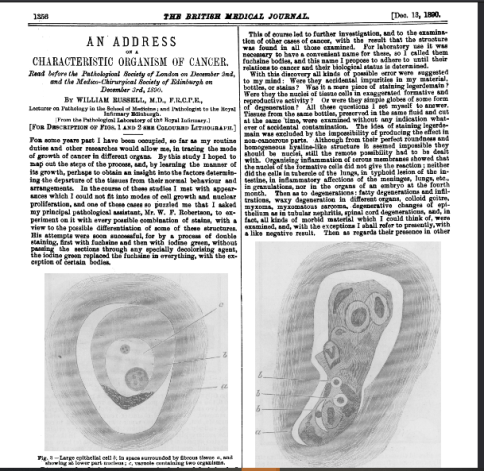
On December 3,1890 the Scottish pathologist William Russell reported a “cancer microbe” seen under his microscope inside cancer cells. His report in the December 18, 1890, British Medical Journal included detailed drawings describing parasitic spores within cancer cells. Over the next 120 years, Dr. Russell’s hypothesis that cancer is a parasitic disease was picked up and championed by a long list of impressive scientists. However, all were labeled as medical heretics and lived out their careers in obscurity.
Dr Lee Merritt recorded videos a few months ago with her findings regarding parasites. Unfortunately, they have been taken off her Bitchite channel due to “inciting hatred.”
This is the type of information that OfCom regulators would like to see disappear from the internet altogether. However, the video below featuring Dr. Merrit has managed to remain on the internet, for the time being at least.
https://rumble.com/v1pugsz-its-all-parasites-cancer-vaccines-remedies.html
Also Published in The Expose
https://ko-fi.com/triciaroc1111
Links
Dr Hulda Clark,(1995). The Cure for all Diseases, Download Pdf. https://www.academia.edu/42529592/The_Cure_for_all_Diseases_Hulda_R_Clark
(Dr. Ross Anderson, The Tree of Life,Parasite Picture Gallery https://thelifetree.com/pages/parasite-picture-gallery2
If used, you can become infected with opisthorchiasis https://de.parazitiintestinali.com/6580537-you-can-become-infected-with-opisthorchiasis-when-used
Introduction to Parasitology, Medical Microbiology. 4th edition. https://www.ncbi.nlm.nih.gov/books/NBK8262/
Parasite Cleansing For Humans & Pets – Watch Pictures, Photos & Videos – TheLifeTree.com thelifetree.com/pages/parasite-picture-gallery2
Parasites – Cryptosporidium (also known as “Crypto”) CDC.GOV
Raga et al, (2009), Parasites, Science Direct online https://www.sciencedirect.com/science/article/abs/pii/B9780123735539001930